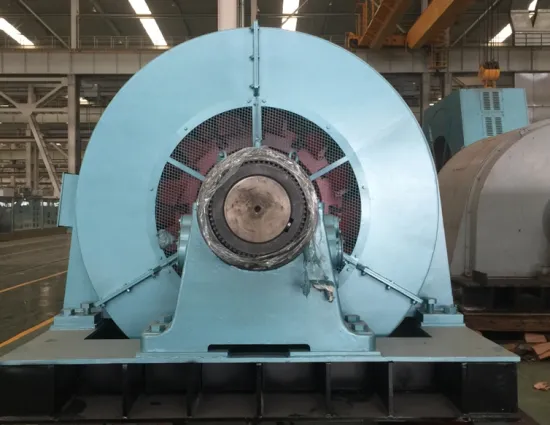
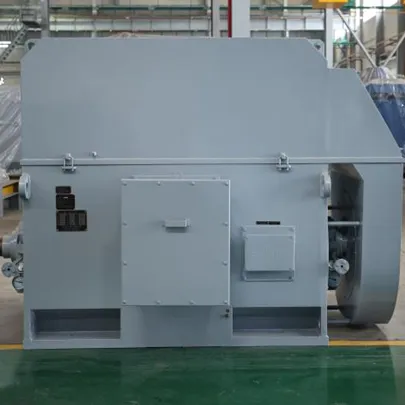
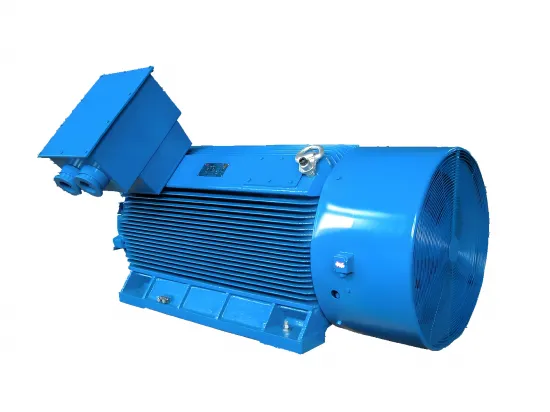
When comparing a wound rotor motor vs squirrel cage motor, engineers and procurement managers often focus on starting torque, current control, maintenance cost, and long-term efficiency. Both motor types belong to the family of induction motors and are widely used in industrial applications. However, their structural design and performance characteristics differ significantly.
Choosing the right motor is not just about horsepower or price. It affects system stability, energy consumption, downtime, and operational flexibility. This comprehensive guide explains the differences between wound rotor and squirrel cage motors, their advantages and disadvantages, and how to select the right solution for your application.
A squirrel cage motor is the most common type of induction motor. Its rotor consists of conductive bars (usually aluminum or copper) short-circuited by end rings, forming a structure that resembles a squirrel cage.
Simple and robust construction
Low maintenance requirements
High efficiency
Moderate starting torque
High starting current
When alternating current flows through the stator windings, it creates a rotating magnetic field. This field induces current in the rotor bars. The interaction between the induced current and magnetic field generates torque.
Because the rotor bars are permanently shorted, there is no external access to the rotor circuit. This limits starting control but improves reliability.
A wound rotor motor, also known as a slip ring motor, has a rotor with windings similar to the stator. These windings are connected to slip rings mounted on the shaft. External resistors can be inserted into the rotor circuit through brushes and slip rings.
High starting torque
Lower starting current (with external resistance)
Adjustable speed and torque during startup
More complex structure
Higher maintenance requirements
Like the squirrel cage motor, the stator produces a rotating magnetic field. However, because the rotor windings are accessible via slip rings, external resistance can be added during startup. This improves starting torque and reduces inrush current.
After startup, the external resistance is gradually removed to allow normal operation.
| Feature | Squirrel Cage Motor | Wound Rotor Motor |
|---|---|---|
| Rotor Design | Conductive bars shorted by end rings | Three-phase wound rotor with slip rings |
| External Rotor Access | No | Yes |
| Complexity | Simple | More complex |
| Maintenance | Low | Higher |
| Cost | Lower initial cost | Higher initial cost |
The squirrel cage motor is mechanically simpler and more rugged. The wound rotor motor offers more control but at the expense of added components like brushes and slip rings.
One of the most important differences in the wound rotor motor vs squirrel cage debate lies in starting performance.
High starting current (typically 5–8 times rated current)
Moderate starting torque
Limited torque control without external devices
To improve starting performance, soft starters or variable frequency drives (VFDs) are often used.
High starting torque
Reduced starting current (via external resistors)
Smooth acceleration control
For heavy-load applications such as crushers, conveyors, hoists, and mills, wound rotor motors offer a significant advantage during startup.
Speed control is typically achieved using:
Variable Frequency Drives (VFDs)
Pole changing methods (limited cases)
Without electronic control, speed variation is minimal.
Speed can be adjusted during startup by varying rotor resistance. However, for continuous speed regulation, modern systems usually adopt VFDs instead.
While historically wound rotor motors were preferred for speed control, advancements in power electronics have reduced this advantage.
In steady-state operation:
Squirrel cage motors generally have higher efficiency.
Wound rotor motors may experience additional losses due to slip rings and rotor resistance.
Because squirrel cage motors lack brushes and slip rings, mechanical losses are lower. This makes them ideal for continuous operation environments.
In energy-sensitive industries, high-efficiency squirrel cage induction motors are commonly selected.
Minimal maintenance
No brushes or slip rings
High mechanical strength
Longer service intervals
These motors are well-suited for harsh industrial environments.
Brushes and slip rings require regular inspection
Higher wear and tear
More downtime risk
Although reliable when properly maintained, wound rotor motors require a structured maintenance schedule.
Squirrel cage motor: Lower purchase cost
Wound rotor motor: Higher due to additional components
Squirrel cage motor: Lower maintenance cost
Wound rotor motor: Higher maintenance and component replacement cost
When evaluating total cost of ownership (TCO), squirrel cage motors are often more economical in standard applications.
Pumps
Fans
Compressors
HVAC systems
Machine tools
General industrial drives
These applications usually do not require extremely high starting torque.
Cranes and hoists
Ball mills
Crushers
Elevators
Heavy conveyors
Industries such as mining, metallurgy, cement, and port operations often prefer wound rotor motors for heavy-duty startup conditions.
For example, manufacturers like Changli Electric provide both squirrel cage and wound rotor motors for industrial heavy-load applications, ensuring customized solutions based on torque and load requirements.
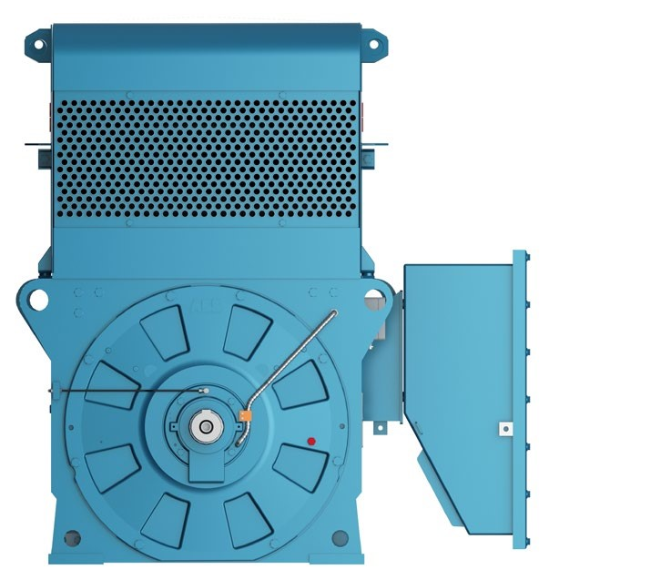
With the widespread use of VFDs, squirrel cage motors have gained significant advantages:
Smooth soft starting
Precise speed control
Energy savings
Reduced mechanical stress
Modern VFD-controlled squirrel cage motors can achieve performance levels once exclusive to wound rotor motors.
However, in extremely high-power or high-inertia applications, wound rotor motors still maintain relevance.
Companies such as Changli Electric continue to support both technologies, especially in heavy industries where mechanical starting control remains essential.
Advantages:
Simple design
Low cost
High efficiency
Low maintenance
Durable
Disadvantages:
High starting current
Limited torque control without VFD
Advantages:
High starting torque
Lower starting current
Adjustable startup characteristics
Disadvantages:
Higher maintenance
Higher cost
More complex system
When selecting between the two, consider the following factors:
High inertia load? → Wound rotor motor
Standard load? → Squirrel cage motor
Frequent starts under heavy load? → Wound rotor
Continuous operation? → Squirrel cage
Limited budget? → Squirrel cage
Limited maintenance resources? → Squirrel cage
Advanced speed regulation? → Squirrel cage with VFD
Wound rotor motors are better suited for heavy starting loads because they offer high starting torque and controlled current through external resistance.
Yes, in most steady-state operations, squirrel cage motors are more efficient due to their simpler rotor structure and lower mechanical losses.
In many modern systems, yes. With the integration of VFD technology, squirrel cage motors can handle applications previously dominated by wound rotor motors. However, extremely high-power or specialized heavy-duty systems may still benefit from wound rotor designs.
Because they include brushes and slip rings, which are subject to wear and require periodic inspection and replacement.
Squirrel cage motors are more widely used due to their durability, efficiency, and lower lifecycle cost.
The comparison of wound rotor motor vs squirrel cage ultimately depends on application requirements. Squirrel cage motors dominate the market thanks to their simplicity, reliability, and cost efficiency. They are ideal for most industrial applications where extreme starting torque is not required.
Wound rotor motors, on the other hand, provide superior starting torque and current control, making them valuable in heavy-duty, high-inertia environments.
With advances in motor control technologies, the gap between the two continues to narrow. Still, understanding their structural differences, performance characteristics, and maintenance implications is essential for making an informed decision.
Selecting the right motor is not about choosing the more advanced option. It is about matching the motor to the load, environment, and operational strategy for long-term performance and efficiency.