When selecting an electric motor for industrial applications, engineers often compare different types of induction motors. One common question is: when is a wound rotor induction motor to be used?
While squirrel cage motors dominate the market due to their simplicity and low maintenance, wound rotor induction motors still play a critical role in demanding industrial environments. They are specifically designed for applications requiring high starting torque, controlled acceleration, and reduced inrush current.
In this article, we will explore the working principle, advantages, disadvantages, and typical applications of wound rotor induction motors. By the end, you will clearly understand when this motor type is the right solution for your project.
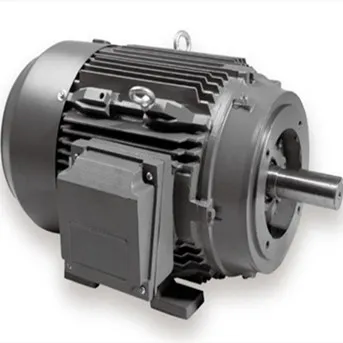
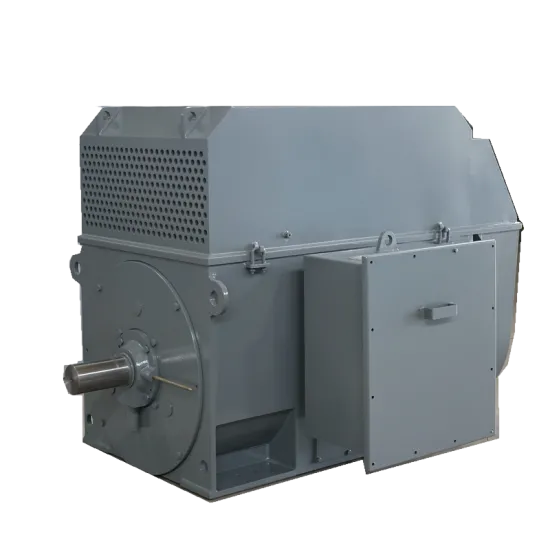
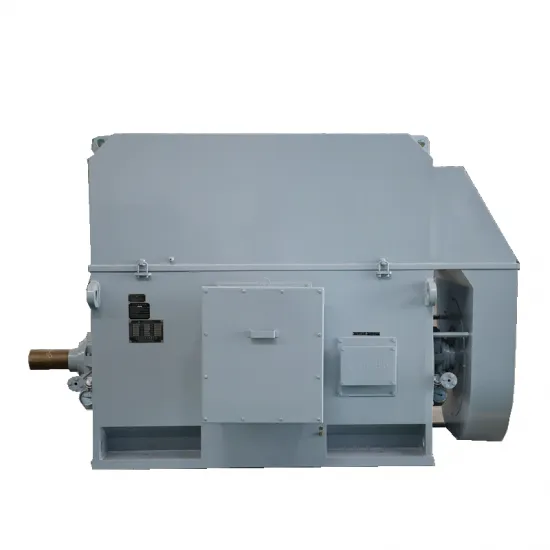
A wound rotor induction motor, also known as a slip ring motor, is a type of three-phase induction motor where the rotor windings are connected to external resistances through slip rings and brushes.
Unlike squirrel cage motors, the rotor circuit in a wound rotor motor is accessible. This design allows external resistance to be added during startup, improving torque performance and controlling current.
Stator with three-phase windings
Rotor with three-phase windings
Slip rings
Carbon brushes
External resistor bank
This structure enables adjustable starting characteristics, making the motor suitable for heavy-duty operations.
The operating principle is based on electromagnetic induction. When three-phase power is supplied to the stator, a rotating magnetic field is generated. This magnetic field induces current in the rotor windings.
The key difference lies in the startup process:
External resistance is added to the rotor circuit.
This increases rotor resistance.
Higher rotor resistance produces higher starting torque.
Starting current is reduced compared to direct-on-line startup.
As the motor accelerates, the external resistance is gradually reduced. Eventually, the rotor windings are short-circuited, and the motor runs like a standard induction motor.
This ability to control acceleration and torque makes it especially useful in heavy-load conditions.
Now let’s address the core question directly.
A wound rotor induction motor should be used in applications where:
High starting torque is required
Starting current must be controlled
Smooth acceleration is necessary
Heavy loads are present at startup
Mechanical stress must be minimized
Let’s examine these scenarios in detail.
One of the main reasons to use a wound rotor motor is its excellent starting torque performance.
Industries that benefit from this include:
Mining operations
Cement plants
Steel mills
Heavy conveyor systems
Crushers and grinders
Machines such as crushers and ball mills often start under full load. A squirrel cage motor may struggle or draw excessive current. A wound rotor motor, however, can deliver strong starting torque without overloading the power system.
Large motors can create high inrush currents during startup. This can:
Cause voltage drops
Affect other equipment
Trigger protective systems
Increase utility demand charges
By adding external rotor resistance, a wound rotor induction motor reduces starting current significantly.
This makes it ideal for:
Facilities with weak power grids
Remote industrial plants
Sites with limited transformer capacity
When electrical infrastructure cannot handle high inrush current, this motor type becomes a practical solution.
Some industrial systems have high inertia. These systems require gradual acceleration to prevent mechanical damage.
Examples include:
Large fans
Industrial blowers
Flywheel systems
Rolling mills
A wound rotor motor allows controlled acceleration. By gradually reducing rotor resistance, the motor smoothly reaches rated speed. This reduces mechanical stress on shafts, couplings, and gearboxes.
In applications with repeated starting and stopping, motor heating and mechanical wear become major concerns.
A wound rotor induction motor helps by:
Reducing thermal stress
Limiting peak current
Providing smoother torque delivery
Although modern variable frequency drives (VFDs) are often used today, wound rotor motors remain reliable in heavy-duty environments where simplicity and robustness are priorities.
Some systems require extended acceleration times to protect process stability.
Examples include:
Belt conveyors in mining
Port crane systems
Bulk material handling equipment
In these cases, sudden acceleration could cause belt slippage or structural damage. Controlled rotor resistance ensures steady torque and gradual speed increase.
Understanding when to use a wound rotor motor requires comparison.
High starting torque
Reduced starting current
Adjustable acceleration
Better performance under heavy load
Higher cost
Requires maintenance of slip rings and brushes
More complex system
Larger footprint
For light-duty or general-purpose applications, squirrel cage motors are usually preferred. But in demanding industrial settings, wound rotor motors still outperform alternatives.
Wound rotor induction motors are frequently found in:
Mining industry
Cement manufacturing
Steel production
Oil and gas facilities
Port operations
Power plants
Manufacturers such as Changli Electric design wound rotor induction motors specifically for these heavy-duty sectors, ensuring reliability under harsh working conditions.
With advancements in motor control technology, variable frequency drives (VFDs) are increasingly used to control starting torque and speed.
However, wound rotor motors remain relevant because:
They are mechanically robust
They tolerate harsh environments
They handle extreme loads effectively
They are suitable for very high power ratings
In high-capacity industrial plants, a wound rotor induction motor can still be more economical and reliable than a complex electronic system.
Companies like Changli Electric continue to supply these motors to industries where durability and performance are critical.
Before deciding whether to use a wound rotor induction motor, evaluate:
Load characteristics
Required starting torque
Power supply limitations
Budget constraints
Maintenance capability
Environmental conditions
If the application involves high inertia and heavy startup loads, a wound rotor motor is often the correct choice.
The main advantage is high starting torque with reduced starting current. This makes it suitable for heavy-load applications.
It depends on the application. For simple and light-duty uses, squirrel cage motors are more economical. For high torque and controlled startup, wound rotor motors are superior.
They are commonly used in mining, cement plants, steel mills, cranes, and heavy conveyors.
Yes. The presence of slip rings and brushes requires periodic inspection and maintenance.
In many cases, yes. However, for extremely heavy-duty and high-power applications, wound rotor motors may still be preferred due to robustness and simplicity.
So, when is a wound rotor induction motor to be used?
It should be used in applications that demand:
High starting torque
Controlled acceleration
Reduced inrush current
Reliable performance under heavy load
Although modern motor control technologies offer alternatives, wound rotor induction motors remain essential in industries such as mining, cement, and steel production.
Choosing the right motor depends on understanding load conditions, power system limitations, and operational requirements. When heavy-duty performance and controlled startup are critical, the wound rotor induction motor continues to be a proven and reliable solution.