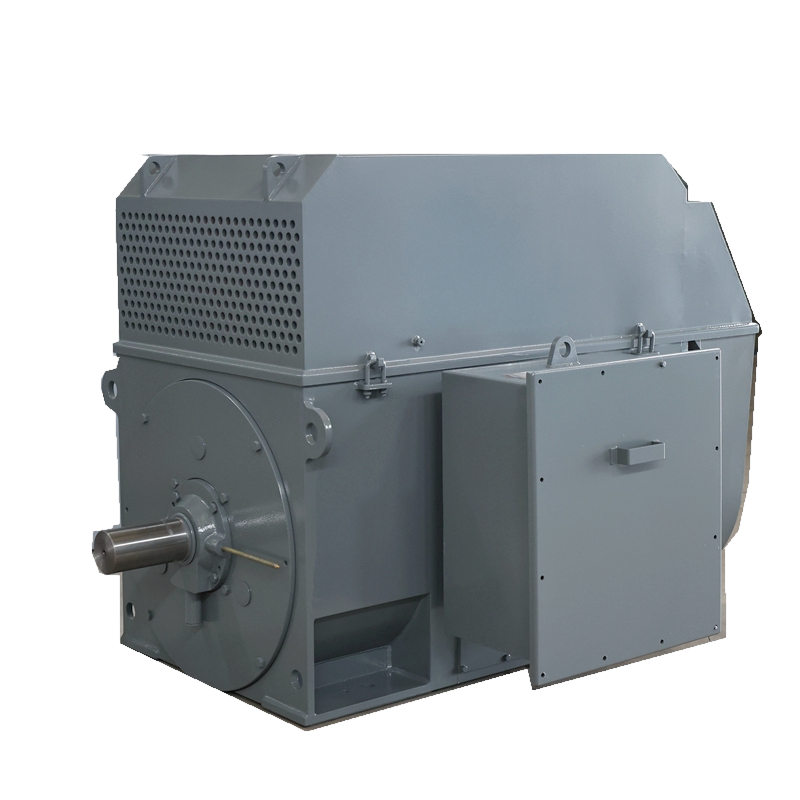
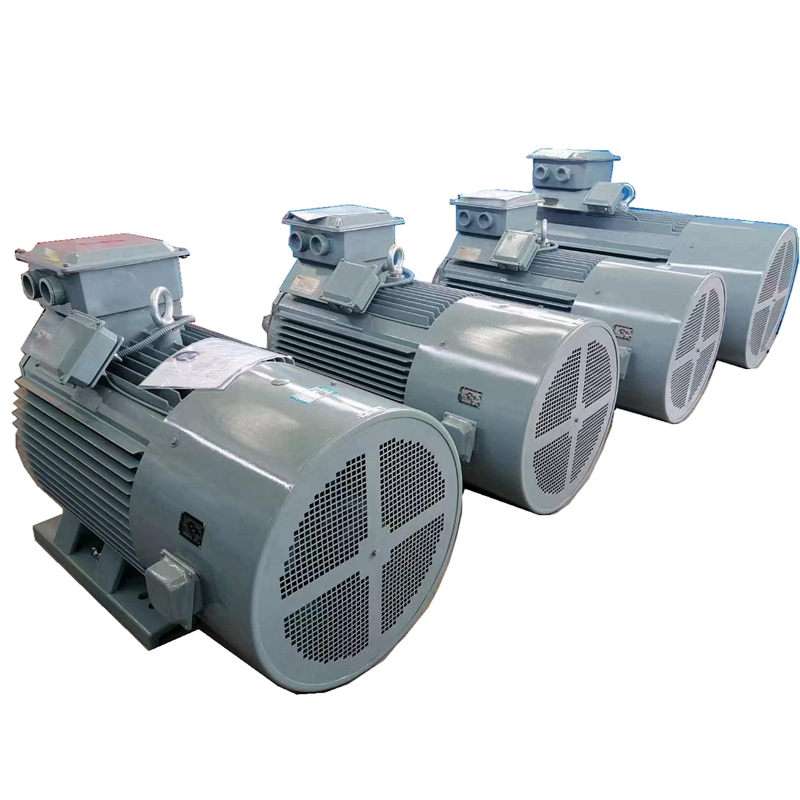
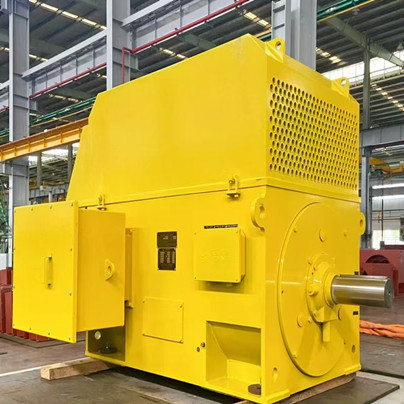
I maintain Synchronous Motors by combining safe isolation, scheduled inspection, electrical testing, mechanical checks, and documented condition trends. How to Maintain a Synchronous Motor for Reliable Long-Term Operation depends on more than cleaning the housing or replacing lubricant; the program must also address excitation equipment, insulation, bearings, alignment, vibration, temperature, and protection systems. In my experience, a practical maintenance plan uses daily operating observations, monthly inspections, quarterly testing, and a deeper annual assessment.
Synchronous motors can operate for many years when their cooling paths remain clear, electrical connections stay tight, lubrication matches the bearing design, and developing faults are identified before they cause a shutdown. CHANGLI ELECTRIC MOTOR manufactures industrial motor types that include synchronous motors, high-voltage motors, medium-voltage motors, low-voltage motors, and customized motor designs. The exact maintenance limits should always come from the motor nameplate, drawings, commissioning records, and manufacturer documentation.
!
Synchronous motor maintenance is the planned process of inspecting, testing, cleaning, lubricating, adjusting, and repairing a motor so it can operate within its design limits. Unlike a simple visual service, it evaluates both the stator and rotor systems, including the excitation circuit, damper components, slip rings or brushes where fitted, bearings, cooling equipment, and protective relays. I treat maintenance as a continuing condition assessment rather than a single yearly task.
The maintenance approach differs according to motor construction. A brushed wound-field motor requires brush wear inspection, slip-ring cleaning, spring-pressure checks, and rotor-circuit testing. A brushless synchronous motor removes many brush-related tasks but still requires inspection of the rotating rectifier, exciter, bearings, insulation, and cooling system. Permanent-magnet synchronous motors do not use field windings in the same way, so maintenance focuses more heavily on stator insulation, inverter interaction, rotor temperature, bearings, air gap, and demagnetization risk.
Synchronous motor maintenance is worth the cost when the motor drives a production-critical compressor, pump, fan, mill, conveyor, or other high-value load. The financial decision should compare planned maintenance hours and spare parts with the cost of unplanned downtime, emergency rewinding, coupling damage, product loss, and secondary equipment failure.
I use the following sequence for a synchronous motor maintenance guide. The sequence should be adapted to motor voltage, power rating, enclosure type, duty cycle, operating environment, and the manufacturer’s service instructions.
Before opening covers or touching terminals, I stop the driven equipment, isolate all electrical sources, discharge stored energy, and apply an approved lockout/tagout procedure. A synchronous motor may have separate stator, field, exciter, heater, braking, and control circuits, so isolating only the main supply is not sufficient. I also verify zero energy with correctly rated test instruments and confirm that the shaft cannot rotate from process forces or another connected machine.
The maintenance record should identify the motor, rated voltage, rated current, power, speed, excitation method, bearing type, last service date, and the reason for the inspection. For high-voltage equipment, only personnel qualified for the applicable voltage level should perform testing or access internal components.
My synchronous motor inspection procedures begin with the enclosure, terminal box, cable glands, cooling passages, guards, foundation, and surrounding area. I look for dust accumulation, oil leakage, moisture, corrosion, loose covers, damaged conduit, blocked filters, abnormal odor, discoloration, and evidence of tracking or overheating. On open or protected motors, I inspect air-to-air or air-to-water heat exchangers, fans, filters, ducts, and temperature sensors.
Cleaning must match the motor design. Dry, nonconductive dust can often be removed with controlled vacuum cleaning or clean, dry air where the procedure permits it, while oil or moisture contamination may require a specialist cleaning method. I never direct high-pressure air toward seals, bearings, winding surfaces, or instrumentation because contamination can be pushed deeper into the motor.
A blocked cooling path increases winding, bearing, and insulation temperature, which can shorten service life. During operation, I record stator winding temperature, bearing temperature, ambient temperature, cooling-water temperature where applicable, and the difference between inlet and outlet conditions. I compare these values with the commissioning baseline and manufacturer alarm settings instead of applying one universal temperature limit.
For routine service, I inspect fan blades, filters, heat-exchanger tubes, water flow, valves, drain points, and temperature switches. A temperature increase of approximately 10°C above a stable historical baseline deserves investigation, even when the motor remains below its alarm setting. Possible causes include overload, voltage imbalance, restricted airflow, bearing friction, poor alignment, high ambient temperature, or a failed sensor.
Bearing maintenance must follow the bearing type and lubricant specification. I record bearing temperature and vibration, inspect for leakage or discoloration, and check whether grease relief paths are open. Over-greasing can produce heat and churning, while under-greasing can cause metal contact, race damage, and rising vibration.
The maintenance record should state lubricant grade, quantity, application method, and date. I do not mix grease types unless compatibility has been confirmed. For oil-lubricated bearings, I check oil level, viscosity, contamination, seals, cooling, and sampling results. Any repeated temperature rise, metallic particles, abnormal noise, or rapid vibration increase requires a bearing assessment rather than simply adding more lubricant.
Electrical monitoring is central to synchronous motor maintenance because a motor can appear mechanically normal while its insulation, excitation, or supply system is deteriorating. I inspect terminal tightness, cable lugs, bus connections, grounding conductors, surge protection, space heaters, and control wiring. Thermal imaging during a stable load can identify an overheated connection, but the motor must be tested under safe and suitable operating conditions.
During operation, I trend line voltage, line current, current balance, power factor, active power, reactive power, field current, field voltage, and speed. Persistent phase-current imbalance, a falling power factor, unstable excitation current, or repeated loss-of-synchronism alarms should be investigated with the protection and control system. The acceptable values depend on the motor design and load, so I compare them with nameplate data and commissioning measurements.
For de-energized testing, I may use winding resistance measurement, insulation resistance testing, polarization index testing where applicable, surge comparison testing, and excitation-circuit checks. Test voltage, duration, temperature correction, and acceptance limits must follow the applicable procedure, motor rating, and manufacturer instructions. IEEE 43 and IEC 60034 documents are commonly consulted for relevant insulation and rotating-machine testing practices, but they do not replace the motor-specific service limits.
Mechanical condition checks cover the motor feet, baseplate, anchor bolts, foundation grout, shaft extension, coupling, guards, and connected equipment. I look for soft foot, looseness, cracked grout, shifted shims, coupling wear, excessive backlash, and signs that the driven machine is imposing abnormal radial or axial load.
Laser alignment or dial-indicator measurements should be performed after the equipment reaches its normal operating condition where thermal growth is significant. I compare the measured values with the coupling supplier’s tolerance and the motor manufacturer’s alignment requirements. A motor that is aligned cold but misaligned during operation can develop bearing temperature, seal, vibration, and shaft problems.
On salient-pole or large synchronous motors, air gap inspection may be required during a planned outage. I measure the air gap at defined angular positions and compare the results for uniformity. A changing or uneven air gap can indicate rotor movement, bearing wear, stator displacement, or foundation problems, and it should not be corrected by adjusting one component without identifying the cause.
Synchronous motor vibration monitoring provides early evidence of imbalance, misalignment, looseness, bearing damage, rotor problems, electrical forces, or resonance. I collect vibration readings at consistent locations and directions, including horizontal, vertical, and axial positions at both bearings. For larger machines, spectrum analysis, phase analysis, shaft displacement, and online monitoring can reveal faults that overall vibration values may hide.
The most useful comparison is not a single reading but a trend against a verified baseline. I investigate a sustained increase of about 25% from the established baseline, a sudden change after maintenance, or a reading that approaches the alarm level defined by the manufacturer and site standard. ISO 20816 classifications may support evaluation, but machine size, mounting, speed, and measurement location must be considered before applying a limit.
Predictive maintenance software can combine vibration, temperature, current, power factor, and alarm history. I use these systems to prioritize inspection and reduce unnecessary teardown, not to replace physical examination. A trend that points to a bearing fault should be confirmed through inspection, lubrication review, ultrasound, oil analysis, or another suitable test before major repair decisions are made.
The following schedule gives plant technicians a practical starting point. I adjust it for operating hours, load severity, contamination, starts per day, environmental conditions, and the criticality of the driven process.
| Interval | Maintenance tasks | Records to capture |
|---|---|---|
| Each shift or daily | Check sound, odor, temperature, current, voltage, power factor, vibration indication, cooling flow, and alarms | Operating values and abnormal observations |
| Monthly | Inspect cleanliness, terminals, filters, fans, heaters, guards, foundation, and visible oil or grease leakage | Inspection findings and corrective actions |
| Quarterly | Review vibration trends, thermography, bearing condition, excitation values, protection events, and current balance | Trend plots, images, and alarm history |
| Every 6–12 months | Test insulation as appropriate, inspect connections, verify sensors, examine coupling and alignment, and assess lubricant condition | Test voltage, temperature, resistance, alignment, and lubricant data |
| Major outage | Inspect rotor, stator, air gap, brushes or rotating rectifier, bearings, cooling passages, shaft, and internal fasteners | Dimensional measurements, photographs, test results, and repair scope |
A synchronous motor should receive operating checks every shift, a documented visual inspection at least monthly, condition-review activities approximately quarterly, and a detailed electrical or mechanical assessment every 6 to 12 months. Large or critical motors may require continuous monitoring and an outage inspection based on operating hours, starts, temperature, vibration, and manufacturer recommendations. The correct schedule is risk-based rather than based only on calendar time.
A motor operating in a clean, temperature-controlled room with stable loading may need less intrusive work than one exposed to cement dust, salt air, moisture, high ambient temperature, frequent starts, or variable loading. I shorten inspection intervals when trend data shows deterioration. I extend an interval only when records demonstrate stable conditions and the change has been approved through the site maintenance process.
A maintenance program becomes reliable when every inspection produces comparable data. I record the date, technician, operating load, ambient conditions, test instrument, measurement location, result, acceptance limit, and corrective action. Photographs of terminal boxes, bearing housings, brushes, cooling passages, and damaged components make later comparisons more useful.
I normally classify findings into three levels. A monitor condition has a stable measurement within the approved range and requires continued trending. A repair condition shows deterioration that can be corrected during the next planned outage, such as dirty filters, loose hardware, poor lubrication, or minor alignment deviation. A shutdown or refurbishment condition includes rapidly rising vibration, severe insulation deterioration, repeated protection trips, bearing damage, rotor contact, major air-gap irregularity, or winding faults.
Replacement should be considered when repair cost, remaining service life, efficiency loss, spare-part availability, and failure consequences make continued operation uneconomic. For a large industrial motor, refurbishment may be appropriate when the frame, shaft, laminations, and core remain serviceable. I make the decision from test evidence and total cost, not from age alone.
To answer How to Maintain a Synchronous Motor for Reliable Long-Term Operation, I recommend a structured program that begins with safe isolation and continues through cleaning, cooling inspection, lubrication, electrical testing, alignment, vibration monitoring, and documented corrective action. Daily operating observations identify immediate changes, while monthly, quarterly, and annual tasks reveal slower deterioration in insulation, bearings, excitation equipment, and mechanical structure.
The most effective synchronous motor maintenance plan also distinguishes brushed, brushless, wound-field, and permanent-magnet designs because each has different failure modes and inspection requirements. I use manufacturer limits, baseline measurements, applicable standards, and clearly defined escalation thresholds to decide whether to monitor, repair, refurbish, or replace. With consistent records and condition-based follow-up, industrial facilities can reduce avoidable failures while preserving reliable long-term motor operation.