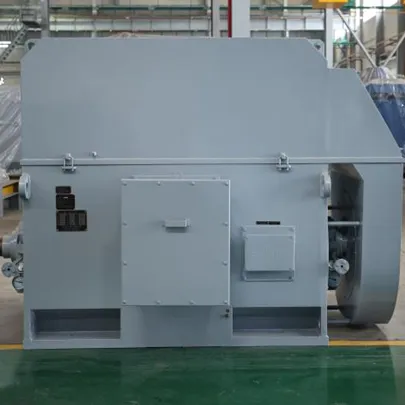
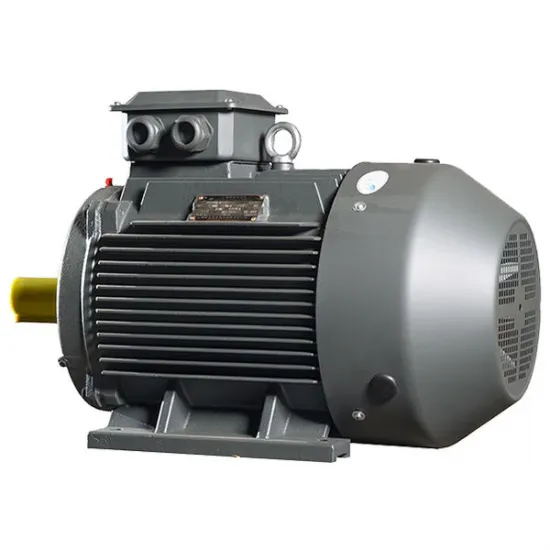
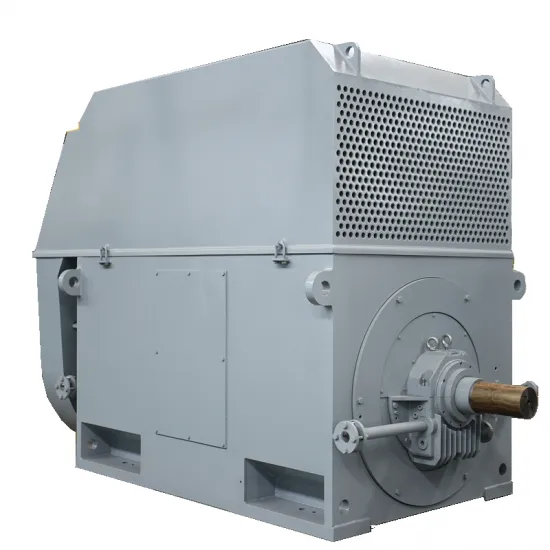
When industries require high starting torque, smooth acceleration, and flexible speed control, the wound rotor motor becomes a reliable solution. But how does a wound rotor motor work, and why is it preferred in certain heavy-duty applications?
Also known as a slip ring induction motor, the wound rotor motor is a type of three-phase induction motor designed to improve starting performance and current control. Unlike squirrel cage motors, it offers external resistance control, making it suitable for cranes, hoists, mills, conveyors, and other high-load machinery.
In this guide, we will explore the structure, working principle, advantages, disadvantages, and real-world applications of wound rotor motors in a clear and practical way.
A wound rotor motor is a type of three-phase induction motor where the rotor contains windings connected to slip rings. These slip rings allow external resistors to be added to the rotor circuit during startup.
It is often referred to as a:
Slip ring induction motor
Slip ring motor
Wound rotor induction motor
The main goal of this design is to control starting current and increase starting torque without damaging the motor or the power system.
Understanding how a wound rotor motor works begins with understanding its core structure.
The stator is the stationary part of the motor. It contains:
Laminated steel core
Three-phase windings
Slots for copper conductors
When three-phase AC power is supplied, the stator generates a rotating magnetic field (RMF).
Unlike squirrel cage motors, the rotor in a wound rotor motor has:
Three-phase insulated windings
Copper conductors placed in rotor slots
Star (Y) connected windings
These rotor windings are connected to slip rings mounted on the rotor shaft.
Slip rings are conductive rings mounted on the rotor shaft. Carbon brushes press against them to:
Connect rotor windings to external resistance
Control current flow during startup
This is the key difference that allows speed and torque control.
An external resistor bank is connected through the slip rings during starting. This resistance is gradually reduced as the motor accelerates.
Now let's answer the main question: how does a wound rotor motor work?
The working principle is based on electromagnetic induction, similar to other induction motors, but with additional rotor resistance control.
When three-phase AC power is applied to the stator:
A rotating magnetic field (RMF) is produced
The field rotates at synchronous speed
The rotating magnetic field cuts across the rotor conductors. According to electromagnetic induction:
Voltage is induced in the rotor windings
Rotor current flows through slip rings and external resistance
This creates rotor magnetic flux.
The interaction between:
Stator magnetic field
Rotor magnetic field
Produces electromagnetic torque.
The rotor begins to rotate in the same direction as the rotating magnetic field.
At startup:
External resistance is inserted into the rotor circuit
Rotor current is limited
Starting torque increases
Starting current drawn from the supply decreases
This makes wound rotor motors ideal for high inertia loads.
As speed increases:
External resistance is gradually reduced
Rotor circuit resistance approaches zero
Motor operates like a standard induction motor
At full speed, slip is small and efficiency improves.
Torque in an induction motor depends on rotor resistance and slip. By increasing rotor resistance:
Starting torque increases
Starting current decreases
Power factor improves during startup
This is why wound rotor motors are widely used in heavy machinery.
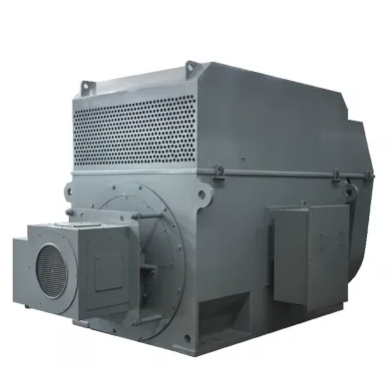
One major advantage is speed control.
Speed can be adjusted by:
Changing rotor resistance
Using variable frequency drives (VFDs)
Cascade control methods
Increasing rotor resistance reduces speed under load. This makes the motor suitable for applications that require controlled acceleration.
Excellent for heavy loads such as cranes and mills.
Reduces stress on electrical networks.
Gradual resistance reduction ensures controlled startup.
Improved torque characteristics compared to squirrel cage motors.
Despite their benefits, there are limitations:
Higher maintenance due to slip rings and brushes
Larger size compared to squirrel cage motors
Higher cost
Brush wear over time
For applications requiring minimal maintenance, squirrel cage motors may be preferred.
Because of their high torque and controllability, wound rotor motors are used in:
Cranes and hoists
Elevators
Crushers
Rolling mills
Conveyors
Cement plants
Mining equipment
In heavy industrial environments, companies such as Changli Electric provide customized wound rotor motor solutions designed for demanding working conditions and high reliability.
| Feature | Wound Rotor Motor | Squirrel Cage Motor |
|---|---|---|
| Starting Torque | High | Moderate |
| Starting Current | Low | High |
| Maintenance | Higher | Low |
| Cost | Higher | Lower |
| Speed Control | Flexible | Limited |
The choice depends on load requirements and operational priorities.
When selecting a wound rotor motor, engineers consider:
Rated power (kW)
Rated voltage
Frequency (50Hz or 60Hz)
Speed (RPM)
Insulation class
Protection level (IP rating)
Duty cycle
Reliable manufacturers such as Changli Electric ensure compliance with international standards and provide motors suitable for harsh industrial environments.
To ensure long service life:
Regularly inspect slip rings
Check carbon brush wear
Clean dust and debris
Monitor bearing temperature
Verify rotor resistance connections
Preventive maintenance reduces downtime and improves performance.
The primary purpose is to provide high starting torque with low starting current, especially for heavy-load industrial machinery.
Slip rings allow external resistance to be connected to the rotor circuit during startup, improving torque and reducing current.
At full load, efficiencies are similar. However, wound rotor motors offer better starting performance but require more maintenance.
Yes. After startup, external resistance is removed, and the motor operates like a standard induction motor.
They are commonly used in cranes, hoists, conveyors, rolling mills, mining equipment, and heavy industrial applications.
So, how does a wound rotor motor work? It operates on the principle of electromagnetic induction, just like other induction motors. However, its unique rotor winding and slip ring system allow external resistance to be added during startup. This improves starting torque, reduces current, and provides better speed control.
Although it requires more maintenance than a squirrel cage motor, the wound rotor motor remains an essential solution for heavy-duty industrial applications that demand smooth acceleration and high starting performance.
For industries dealing with high inertia loads and challenging environments, understanding the working principle of a wound rotor motor helps in selecting the right motor type and ensuring long-term operational efficiency.