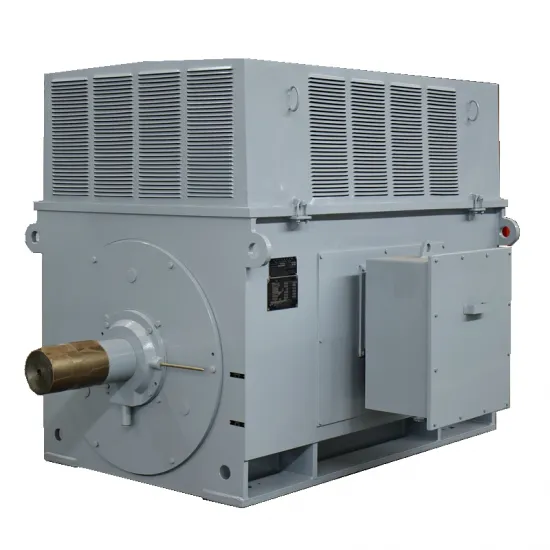
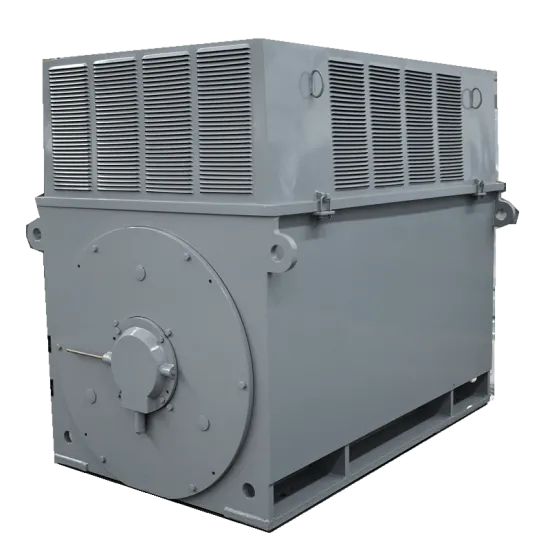
From oil refineries to steel plants, high voltage motors drive the world's essential manufacturing processes. Discover how heavy-duty high voltage electric motors improve reliability and efficiency across key industrial sectors.
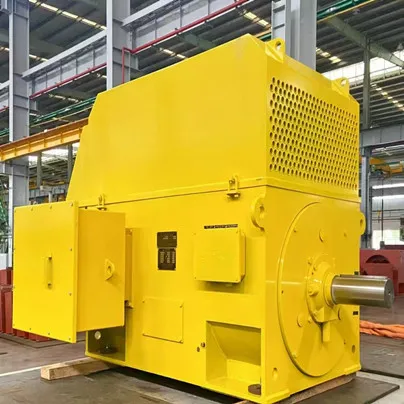
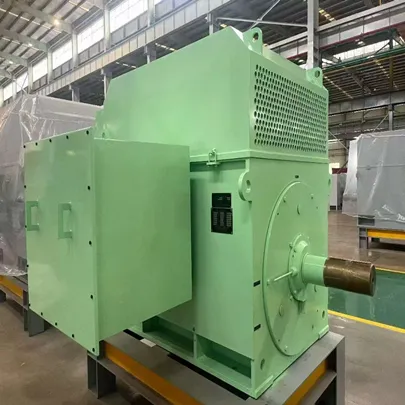
In modern manufacturing industries, heavy loads, continuous operation, and high torque demands require equipment that can withstand extreme conditions. High voltage motors — typically rated above 1 kV — are the powerhouse behind many large-scale industrial processes. Unlike standard low-voltage machines, these robust motors reduce transmission losses, handle higher power outputs, and offer exceptional durability. Whether it's moving tons of raw material or refining crude oil, high voltage motors in manufacturing industries serve as the critical backbone of production lines.
The oil and gas sector relies heavily on high voltage electric motors for upstream, midstream, and downstream operations. From extraction to refining, these motors power large compressors, pumps, and fans that must run continuously for months without interruption. In offshore platforms and onshore refineries, high voltage induction motors drive centrifugal compressors for gas lift, pipeline transmission, and liquefaction plants. Their ability to deliver high starting torque and withstand volatile environmental conditions makes them irreplaceable in hazardous areas.
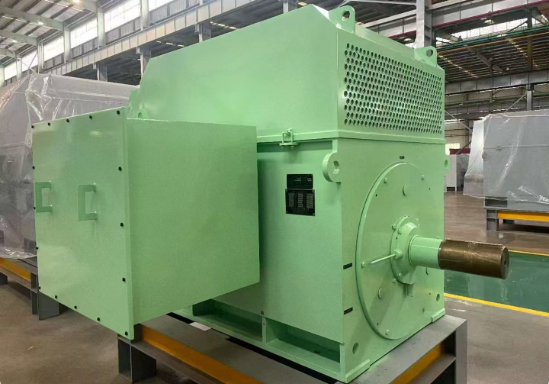
Steel production is energy-intensive and demands extremely robust drive solutions. High voltage motors for manufacturing industries like steel mills are engineered to withstand frequent overloads, high vibration, and dusty environments. Hot rolling mills, cold rolling lines, and plate mills use high power motors up to 20 MW. These motors often operate in reversing duty cycles, with high current peaks; thus they are built with reinforced rotor bars and superior thermal stability.
In a steel plant, roughing stands and finishing stands depend on heavy-duty high voltage motors to shape slabs into sheets and coils. The massive torque produced by high voltage induction motors enables precise tension control and acceleration of heavy metal sections. Additionally, scrap metal crushers and shredders require high inertia-start motors with slip-ring designs. Such applications generate intense shock loads, but high voltage motors with rugged cast-iron frames effectively manage mechanical stress while reducing maintenance intervals.
Blast furnace blowers provide combustion air for ironmaking, and they are exclusively driven by high voltage synchronous motors due to constant speed and high efficiency demands. Similarly, large bucket elevators, conveyors, and sinter plant fans are powered by high voltage motors, allowing steel producers to achieve high throughput without multiple low-voltage feeders. Overall, the reliability of high voltage motors directly contributes to the continuous casting process and lowers total cost of ownership for steel manufacturers.
Cement plants are among the largest industrial consumers of electricity, and high voltage motors in manufacturing industries for cement production are the workhorses of grinding, crushing, and pyroprocessing. Operating 24/7 in dusty, high-temperature environments, these motors must demonstrate exceptional durability. From the raw mill to the cement finish mill, high voltage motors drive massive rotating machinery with high power density.
A rotary kiln (the heart of cement production) often relies on a high voltage slip-ring motor or a variable frequency drive-controlled high voltage induction motor. These motors provide smooth starting torque for large inertial loads, avoiding mechanical stress. Ball mills and vertical roller mills use high voltage motors with output ratings between 2 MW and 15 MW. The slow-speed high torque characteristics directly increase grinding efficiency, leading to finer cement and reduced energy consumption.
Large belt conveyors that transport limestone or clinker are powered by high voltage motors, reducing the number of drives along the line. Clinker cooler fans also require high voltage motors to maintain airflow and quench hot clinker. To ensure high uptime in harsh environments, leading suppliers offer motors with IP55 or higher protection. Reputable manufacturers like Changli Electric design specifically engineered high voltage motors for cement plants, focusing on dust-proof enclosures and reinforced insulation that withstand heavy vibration and voltage fluctuations — making them a trusted choice in demanding grinding applications.
In mining operations, reliability is non-negotiable. High voltage motors power everything from primary gyratory crushers to overland conveyors that stretch for kilometers. The increasing size of mining equipment has driven the demand for high voltage motors (typically 6 kV, 10 kV or even higher) capable of withstanding dust, moisture, and extreme ambient temperatures. This section reviews key mining applications that benefit from high voltage technology.
Primary and secondary crushers require high breakaway torque, and high voltage induction motors with high locked rotor torque accomplish this easily. Likewise, semi-autogenous (SAG) mills and ball mills in mineral processing rely on large high voltage motors (often 5 to 25 MW) to pulverize ore into fine particles. These motors are designed with advanced bearing systems that handle axial and radial loads, preventing premature failures in remote mine sites.
Overland conveyors moving thousands of tons per hour are often equipped with high voltage motors at the drive heads. Multi-motor configurations ensure smooth start-up and load sharing. Additionally, underground mine ventilation fans demand high voltage motors to maintain airflow rates for safety and dust control. By using high voltage power transmission directly to the motor, mines reduce cable size and voltage drop over long distances, improving overall energy efficiency and reducing operating costs.
Large-scale chemical synthesis, fertilizer production, and desalination facilities depend on high voltage motors to drive high-flow pumps, mixers, and compressors. For water and wastewater treatment, high voltage motors are used for raw water intake pumps, booster pumps, and aeration blowers in metropolitan facilities. In aggressive chemical environments, motors must resist corrosion and operate safely in explosive atmospheres (ATEX/IECEx).
Water supply networks and irrigation projects deploy high voltage submersible or vertical motors to pump millions of gallons per day. The high efficiency of such motors directly reduces electricity costs, a major operating expense for utilities. Similarly, chemical plants rely on high voltage canned motor pumps for hazardous liquid transfer where seal-less designs improve safety. High voltage technology enables direct-on-line starting and integration with variable frequency drives for precise flow control.
Large reaction vessels used to produce polymers, acids, and petrochemical intermediates require high torque at low speeds. High voltage motors with gearboxes provide reliable mixing, preventing process upsets. Because chemical processes often run 24/7 for months, maintenance must be minimal. High voltage induction motors with premium insulation systems (Class F or H) withstand temperature spikes and voltage surges, making them ideal for continuous chemical production lines.
Beyond specific industries, high voltage motors in manufacturing industries offer several universal benefits that directly impact uptime and energy costs. Understanding these advantages helps decision-makers select the right motor technology for greenfield projects or facility upgrades.
Higher efficiency at high power levels: For ratings above 500 kW, high voltage motors typically have superior efficiency (up to IE4 levels) compared to low voltage motors, reducing electricity consumption and carbon footprint.
Lower current means less conductor loss: Operating at higher voltage reduces current proportionally, minimizing I²R losses in cabling and switchgear. This is especially beneficial for long cable runs in large plants.
Better power factor and grid stability: Synchronous high voltage motors can be over-excited to improve power factor, canceling reactive power drawn by other inductive loads.
Compact footprint for high power: For high horsepower applications, a high voltage motor often has smaller frame size than a low voltage equivalent, saving floor space.
Proven reliability in harsh environments: Robust insulation systems (like vacuum pressure impregnation) and high-grade bearings allow continuous operation in dusty, hot, or humid manufacturing environments.
Many global equipment manufacturers provide custom-engineered high voltage motors that integrate seamlessly with process control systems. Trusted names such as Changli Electric deliver heavy-duty high voltage motors tailored for cement, mining, and petrochemical sectors, helping industrial end-users achieve lower mean time between failures (MTBF) and higher productivity. Their focus on optimized cooling structures and vibration control reinforces why high voltage motors remain indispensable in large-scale manufacturing.