Users often encounter issues with special motors that can lead to operational inefficiencies. Common hurdles include unexpected shutdowns, overheating, and unusual noise or vibrations. Understanding the real intentions behind these problems is crucial; users want their motors to run smoothly, enhance productivity, and reduce maintenance costs. To n
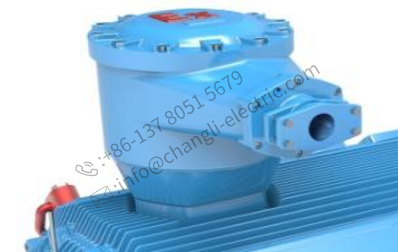
When working in hazardous environments, the choice between explosion-proof motors and standard motors can mean the difference between safety and serious accidents. Many users often ask: What are the tangible benefits of explosion-proof motors? How do the costs compare? In scenarios involving flammable gases or combustible dust, operators are aware
In the realm of industrial applications, the significance of a comprehensive evaluation of products like synchronous motors cannot be overstated. Industries often face the dilemma of maximizing efficiency while managing operational costs. Synchronous motors, known for their precision and reliability, have emerged as a potential solution. However, b
Selecting the right medium voltage electric motor is one of the most important decisions for industries that rely on continuous and heavy-duty operations
In today’s industrial world, electric motors power almost every sector—from mining and metallurgy to oil & gas, chemical processing, and power generation. However, not all environments are the same.
High-voltage motors operate at voltages exceeding 1,000 volts, making them an ideal choice for heavy industry as they are capable of delivering greater power with lower current. Low-voltage motors operate at 1,000 volts or less; consequently, they are suitable for everyday household appliances and smaller-scale industrial tasks.