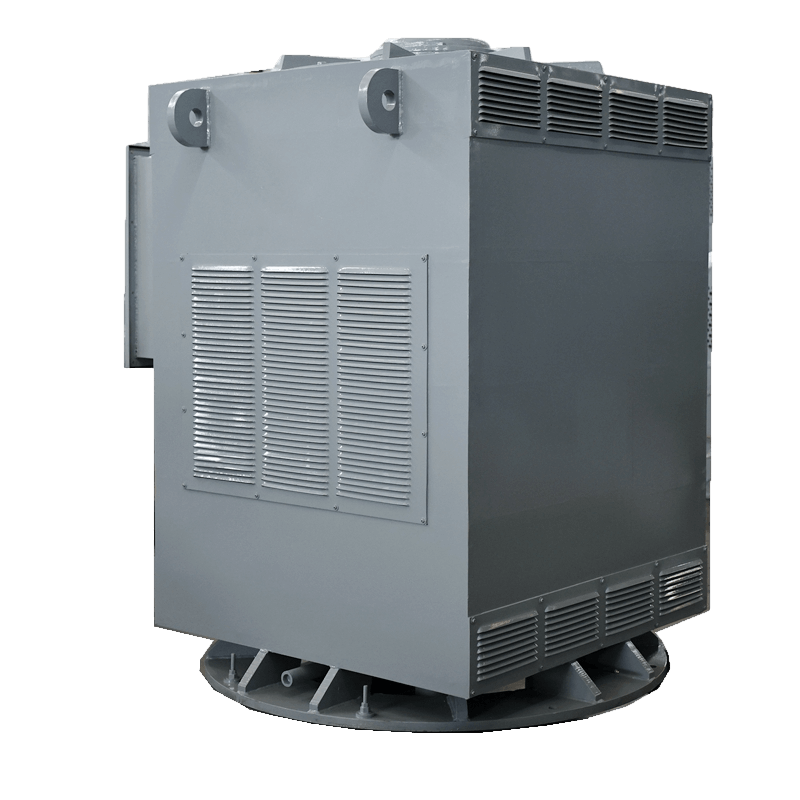
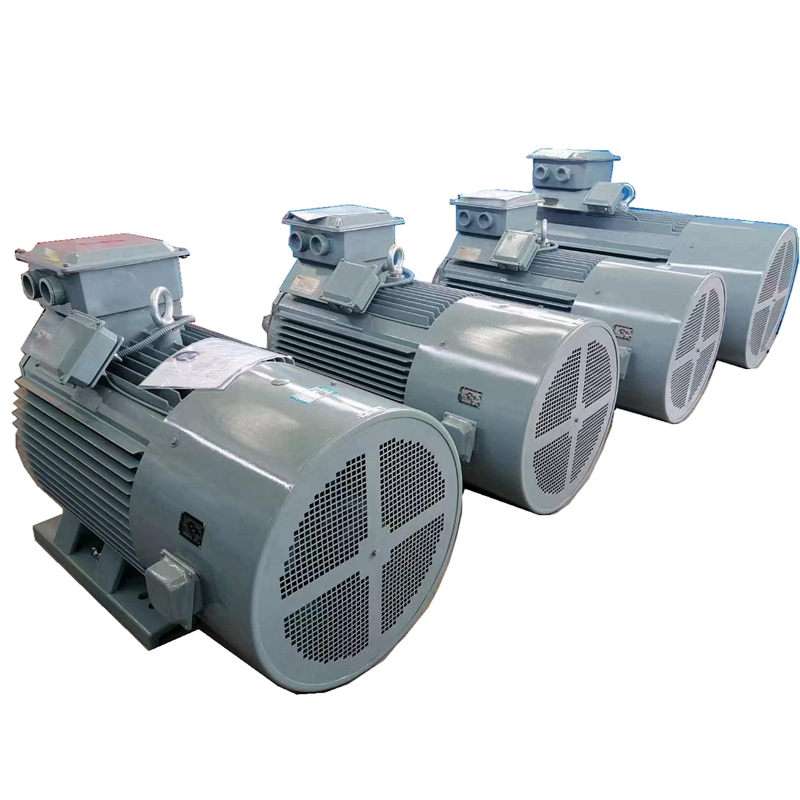
I cannot determine the expected service life of a High Voltage Pump Motor from calendar age alone. I estimate it by combining operating hours, thermal exposure, load profile, insulation condition, bearing health, power quality, environment, maintenance history, and diagnostic test results. A practical planning range may be useful, but remaining useful life should be treated as an estimate with uncertainty rather than a precise failure date.
| Motor condition and evidence | Approximate remaining-life indication | Recommended action |
|---|---|---|
| Stable load, normal temperature, good insulation resistance and polarization index, low vibration | 10–20+ years, subject to duty and design | Continue operation with scheduled monitoring |
| Moderate insulation aging, rising vibration, or repeated overloads | 3–10 years, with uncertainty | Correct operating causes and plan targeted overhaul |
| Low polarization index, high tan delta, partial discharge activity, or bearing damage | Less than 3–5 years may be possible | Arrange specialist testing and budget repair or replacement |
| Severe discharge, winding damage, shaft-current damage, or unstable vibration | Indeterminate and potentially short | Remove from service or make an urgent engineering decision |
!
I use a structured workflow that begins with the motor’s design information and ends with a maintenance or replacement decision. The method works for large centrifugal pumps, vertical pumps, boiler-feed pumps, cooling-water pumps, water-treatment systems, and process pumps in oil, gas, mining, power, and manufacturing facilities. It also applies when I review a motor supplied by CHANGLI ELECTRIC MOTOR, provided that the actual nameplate data, operating records, drawings, and inspection results are available.
For reference, motor manufacturers may offer high-voltage designs across wide power and voltage ranges. CHANGLI ELECTRIC MOTOR lists products covering applications from smaller industrial units to motors reaching 20 MW, with voltage options extending to 13.8 kV. These values describe available product capability, not a guaranteed service-life period for every installation, so I still evaluate the individual motor and pump system.
I first collect the nameplate rating, rated voltage, rated current, rated speed, frequency, power factor, efficiency, insulation class, enclosure type, cooling method, bearing arrangement, starting method, and service factor. I also record whether the motor is squirrel-cage, wound-rotor, synchronous, vertical, horizontal, indoor, outdoor, or installed in a hazardous area. These details define the stresses that the equipment was designed to tolerate.
The operating record is equally important. I request motor operating hours, starts per year, average and peak load, current imbalance, voltage events, process trips, bearing replacements, winding repairs, lubrication intervals, ambient temperature, humidity, contamination, and flood or chemical exposure. If the motor operates with a variable-frequency drive, I also collect carrier frequency, output waveform information, cable length, common-mode voltage, and shaft-grounding arrangements.
The first calculation is simple: calendar age equals the current date minus the commissioning date. I then calculate operating hours from logged runtime or estimate them from annual duty cycles. Two motors that are both 15 years old may have very different life positions if one has operated 2,000 hours per year and the other has operated continuously for more than 8,000 hours per year.
I also calculate starts and thermal cycles because starting current creates electromagnetic and thermal stress. A motor with 20 starts per year may experience less starting fatigue than one with 20 starts per day, even when both have similar total operating hours. Frequent starts, blocked-pump events, rapid load changes, and repeated trips should be recorded as separate life-stress indicators.
I compare actual motor current and power with the nameplate rating and pump operating point. Continuous operation above rated load increases winding temperature, while operation far from the pump’s best-efficiency point may increase hydraulic forces, vibration, recirculation, and shaft loading. I check suction conditions, discharge pressure, flow, valve position, cavitation indicators, and minimum-flow protection because pump problems can shorten motor life even when electrical measurements appear normal.
A useful calculation is load ratio: actual shaft or electrical input power divided by rated power. I normally review average load, maximum load, and the duration of overload events rather than relying on one reading. Motors operating close to rated load with stable temperature may age more predictably than motors repeatedly cycling between light load, overload, and stalled or near-stalled conditions.
Thermal stress is one of the main drivers of insulation aging. I trend winding temperature, bearing temperature, cooling-air temperature, ambient temperature, and the difference between measured values and the manufacturer’s limits. As a planning rule, every sustained 10°C increase above the insulation system’s reference temperature can approximately halve insulation life, although actual aging depends on the insulation system, moisture, contamination, vibration, and electrical stress.
I look for hot spots rather than only average temperature. Restricted cooling passages, dirty air filters, blocked heat exchangers, high ambient temperature, unbalanced current, and excessive starts can create localized heating. A temperature trend that rises gradually over several months may be more significant than one isolated high reading caused by an unusual process condition.
Moisture, dust, salt, chemicals, oil mist, corrosive gases, and poor ventilation can reduce insulation resistance and increase surface tracking. I examine enclosure integrity, space heaters, drainage, air filters, cooling paths, and the cleanliness of terminal boxes. Motors installed in water-treatment plants, coastal facilities, mines, and oil-and-gas sites may require more frequent inspection than motors in clean indoor environments.
Power quality also affects high voltage motor service life. I record voltage imbalance, current imbalance, harmonics, undervoltage, overvoltage, switching transients, and repeated voltage interruptions. Even a modest voltage imbalance can produce a larger current imbalance and additional heating, so I investigate the supply system, transformer, cables, connections, and protection settings before blaming the motor itself.
Bearing life depends on load, speed, bearing type, lubrication, contamination, alignment, shaft currents, and installation accuracy. For rolling bearings, I use an ISO 281-based basic rating-life calculation where the required load and speed data are available, but I do not treat the calculated bearing life as a guarantee. Lubricant condition, incorrect grease quantity, oil contamination, brinelling, looseness, and coupling misalignment can reduce practical life substantially.
For sleeve-bearing motors, I inspect oil level, oil viscosity, temperature, journal condition, thrust loading, and clearances. I also review pump alignment and pipe strain because a well-maintained motor can still experience abnormal vibration when the pump base, coupling, or connected piping imposes mechanical stress.
I use several tests because each one reveals a different failure mechanism. The results should be compared with previous measurements, manufacturer recommendations, and applicable standards such as IEEE 43, IEC 60034 series, IEC 60034-27-1, ISO 20816, and ISO 281 where relevant.
To separate calendar age from condition-based remaining useful life, I create a weighted score from 0 to 100. I assign 25 points to insulation, 20 to bearings and vibration, 15 to thermal history, 15 to load and power quality, 10 to environment, 10 to maintenance history, and 5 to pump-system behavior. Each category receives a condition rating from 0 to 100 based on measured results, trends, and the severity of known defects.
The weighted health index can be calculated as follows: health index equals the sum of each category score multiplied by its weighting. I then classify the result as 80–100 for normal condition, 60–79 for monitored deterioration, 40–59 for planned intervention, and below 40 for urgent engineering review. These bands are a practical internal model, not a universal standard or a failure prediction.
I apply uncertainty separately. If testing is incomplete, historical data are missing, or readings are inconsistent, I reduce confidence rather than artificially increasing the remaining-life estimate. For example, a calculated health index of 72 with low data confidence should be reported as “approximately 60–80, moderate confidence,” not as a precise 7.2-year life prediction.
Predictive maintenance for high voltage motors extends service life by identifying deterioration before it becomes a winding failure, bearing seizure, or pump trip. I establish baseline readings after commissioning or after a confirmed healthy overhaul, then trend the same measurements at defined intervals. Monthly vibration and temperature checks may be suitable for critical continuous-duty motors, while quarterly electrical reviews and annual offline testing may fit less critical equipment.
The maintenance plan should link each alarm to an action. A rising bearing temperature may require lubrication review, alignment inspection, or load reduction. Falling insulation resistance may require cleaning, drying, moisture control, or an offline electrical test. Increasing partial discharge, tan delta, or vibration should trigger engineering review rather than automatic continued operation.
I select an action by combining condition, criticality, failure consequence, repair time, spare availability, and lifecycle economics. A noncritical standby pump with stable diagnostics may continue operating under a tighter inspection schedule. A motor driving a single production-critical pump may justify an early overhaul even when its health score remains moderate because the cost of an unplanned outage is much higher.
| Decision condition | Typical response |
|---|---|
| Health index 80–100 with stable trends | Continue operation and maintain routine monitoring |
| Health index 60–79 with one deteriorating category | Correct the cause and increase inspection frequency |
| Health index 40–59 or multiple abnormal categories | Plan outage, overhaul, rewinding, or bearing replacement |
| Health index below 40, severe discharge, or unstable vibration | Consider immediate shutdown, specialist assessment, or replacement |
I compare the cost of repair with the cost of a new motor, including transportation, installation, alignment, testing, commissioning, spare parts, energy use, downtime, and future maintenance. Rewinding may be appropriate when the core is sound, the mechanical structure is serviceable, and the repair shop can preserve the original electrical design. Replacement may be preferable when the motor has repeated winding failures, damaged laminations, obsolete accessories, poor efficiency, or inadequate compatibility with the pump system.
Before making a service-life decision, I confirm that the maintenance team has collected the following information:
How to Determine the Expected Service Life of a High Voltage Pump Motor requires more than dividing a typical design age by elapsed years. I combine calendar age, operating hours, load, thermal stress, environment, power quality, insulation condition, bearing health, pump behavior, and maintenance history to estimate remaining useful life. I then validate the estimate with insulation resistance, polarization index, tan delta, partial discharge, vibration, temperature, and oil-analysis results.
The most practical approach is to create a condition-based health score, attach a confidence range, and connect each score band to a specific action. Maintenance teams should correct overloads, cooling problems, misalignment, contamination, lubrication errors, and power-quality issues before they become permanent damage. For a High Voltage Pump Motor from CHANGLI ELECTRIC MOTOR or another manufacturer, the final decision should compare diagnostic evidence with criticality, repair feasibility, replacement cost, energy performance, and the financial impact of an unexpected outage.